How far in advance must you submit a plan review application to the Utah Department of Agriculture and Food before opening a new food establishment?
Select one answer.
What to expect during your first health inspection
If you're opening a food business in Utah, your first health inspection can feel intimidating. But knowing exactly what happens — and what inspectors look for — will help you walk in prepared. This guide breaks down the entire process, from plan review to the final walkthrough, so you can pass with confidence.
Before the inspection: plan review and pre-operational visit
In Utah, you must submit a plan review application at least 30 calendar days before you start operating. This applies to all new, converted, or remodeled food establishments. The Utah Department of Agriculture and Food (UDAF) or your local health department will review your plans to ensure your facility meets state regulations. Source
Once your plans are approved, construction or remodeling can begin. During this phase, inspectors may conduct site visits to verify compliance with the approved plans. After construction is complete, a pre-operational inspection is scheduled. This is your first official inspection — the inspector will check that everything is built according to plan and that all equipment is properly installed.
What inspectors look for during a routine inspection
Health inspections in Utah focus on critical violations — those most likely to cause foodborne illness. According to the National Restaurant Association, inspectors prioritize five key areas: Source
- Food storage — proper temperature, labeling, and separation of raw and ready-to-eat foods
- Time and temperature control — cooking, holding, cooling, and reheating procedures
- Cross-contamination prevention — separate cutting boards, utensils, and storage areas
- Personal hygiene — handwashing, glove use, and employee health policies
- Kitchen sanitation — clean surfaces, equipment, and pest control
In Utah, inspections also evaluate employee health, sources of food, hygienic practices, HACCP plans, pest control, chemical use and handling, and the physical condition of the facility (water supply, floors, walls, ceilings, lighting, plumbing). Source
How to prepare your team and facility
Preparation is key. Here's a practical checklist to get ready:
- Train all food handlers — Every employee who handles food must have a valid Utah Food Handler Permit. Ensure your team completes an approved course before the inspection.
- Post your permit and manager certification — Your Certified Food Safety Manager (e.g., ServSafe or equivalent) must be registered with the health department and their certificate visible.
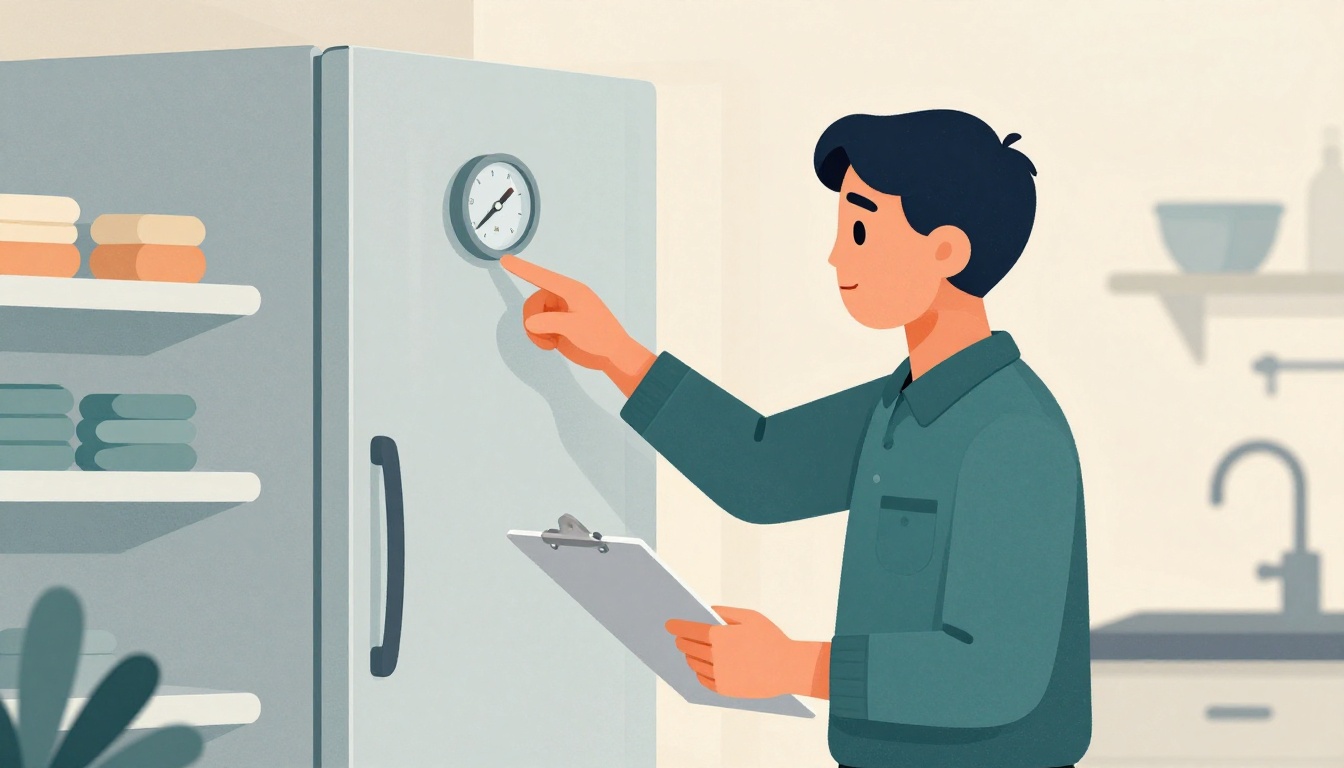
- Keep temperature logs — Maintain daily records of refrigerator, freezer, and hot-holding temperatures.
- Organize cleaning schedules — Have a written cleaning plan for all surfaces, equipment, and schedules.
- Check your sanitizer — Ensure you have the correct sanitizer (quat or chlorine) and test strips available.
- Review your HACCP plan — If you handle specialized processes (e.g., smoking, curing), have your written procedures ready.
- Inspect your facility — Walk through with a critical eye: check for leaks, cracks, pests, and proper lighting.
During the inspection: what to do
When the inspector arrives, stay calm and cooperative. Follow these tips:
- Let the inspector lead — Answer questions directly and succinctly. Don't volunteer extra information.
- Accompany the inspector — Have a manager or owner walk with them to answer questions and take notes.
- Be honest — If you don't know an answer, say so. Guessing can lead to more scrutiny.
- Correct issues on the spot — If the inspector points out a problem, fix it immediately if possible (e.g., adjust a temperature, clean a surface).
After the inspection: understanding your results
Inspectors will provide a written report detailing any violations. In Utah, the goal is voluntary compliance — meaning you'll have a chance to correct issues before penalties are applied. Source
Violations are typically categorized as:
- Critical violations — Immediate risk to public health (e.g., improper cooking temperature). Must be corrected immediately or within a short timeframe.
- Non-critical violations — Less immediate risk (e.g., a missing sign). Usually given a longer correction period.
A follow-up inspection may be scheduled to verify corrections. If violations are severe or repeated, you could face fines, permit suspension, or closure.
How often do inspections happen?
Standard routine inspections are unannounced and occur at least once per year, though high-risk establishments may be inspected more frequently. Source In Utah, inspection frequency is based on risk level, volume of food, target population, and compliance history.
How the Featured Expert Can Help
Preparing for your first health inspection starts with proper food handler training. Utah State Food Handlers offers live, in-person certification classes across Utah, giving you hands-on instruction and real-time feedback from an experienced instructor. Their state-approved training covers the food safety essentials you need to pass inspection and keep your customers safe. Classes are quick, affordable, and designed for busy food service professionals.