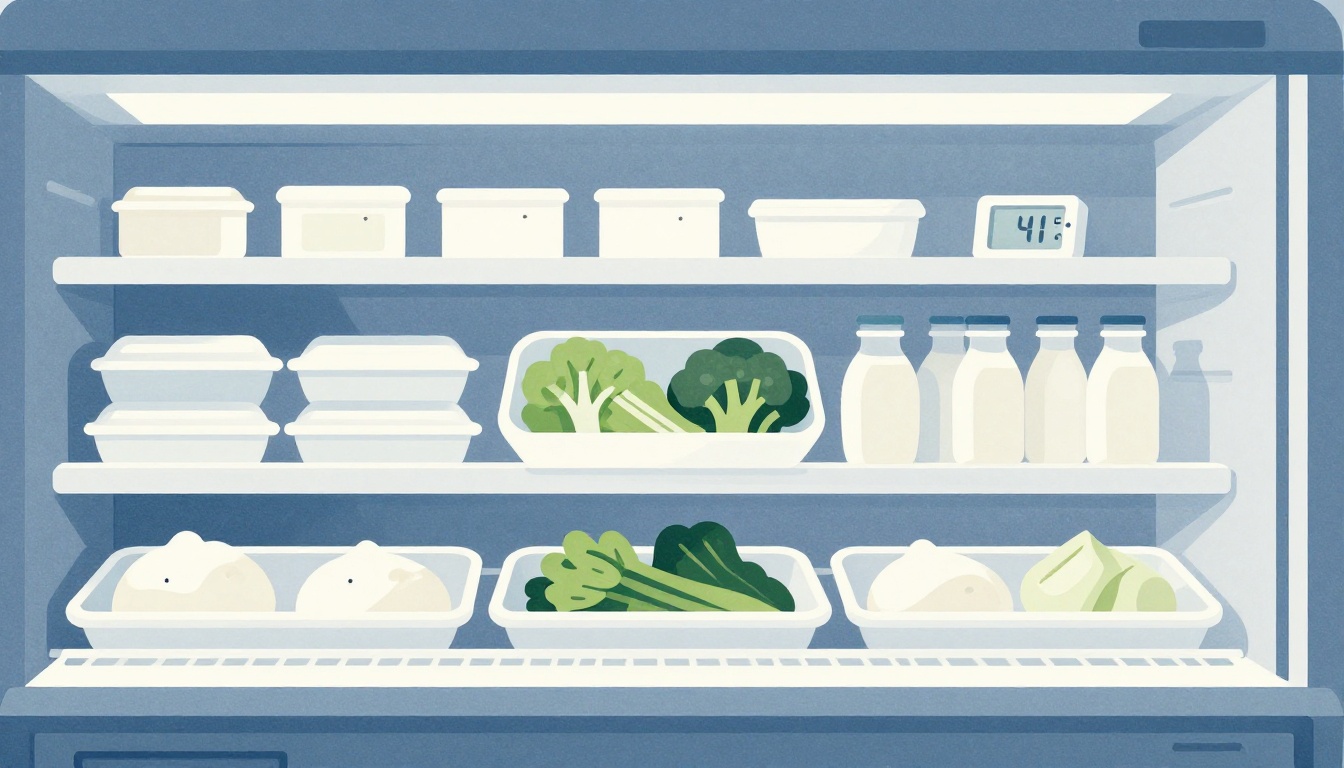
If you work in a Utah restaurant, food truck, or residential care kitchen, keeping cold food at the right temperature isn't just good practice — it's the law. Utah's food safety regulations, based on the FDA Model Food Code, set a clear cold holding limit: 41°F (5°C) or below for all time/temperature control for safety (TCS) foods. Exceed that limit, and you risk rapid bacterial growth, foodborne illness, and failed health inspections.
Which of the following is the maximum cold holding temperature for TCS foods under Utah food code?
Select one answer.
What the Utah food code says about cold holding
Utah Administrative Code R392-110-5 explicitly requires that "any TCS food product stored inside a refrigerator... is stored at 41 degrees F or below." This applies to all food service establishments, including residential care facilities, mobile food businesses, and restaurants. The rule is enforced by local health officers during routine inspections.
For mobile food businesses (food trucks and carts), the same standard applies. Utah Rule R392-102 requires that commissaries — the base kitchens where mobile units prepare and store food — maintain hot and cold holding of TCS foods at the required temperatures.
Why 41°F is the magic number
The FDA Model Food Code, which Utah adopts by reference, sets the cold holding limit at 41°F because research shows that most foodborne pathogens (like Salmonella, E. coli, and Listeria) cannot multiply to dangerous levels at or below this temperature. The "danger zone" for bacterial growth is between 41°F and 135°F. Within that range, bacteria can double in number every 20 minutes.
Utah's summer heat makes this especially critical. A 2017 Utah Department of Health study found that improper cold holding temperatures were one of the most frequently reported violations during summer months, when outdoor temperatures regularly exceed 100°F.
Which foods require cold holding?
TCS foods that must be kept at 41°F or below include:
- Cooked meats, poultry, and seafood
- Dairy products (milk, cheese, yogurt)
- Eggs (raw and cooked)
- Cut fruits and vegetables
- Cooked rice, beans, and pasta
- Soups, sauces, and gravies
- Any prepared ready-to-eat food that will be served cold
Practical steps to stay compliant
- Calibrate thermometers daily. Use a probe thermometer to check the internal temperature of cold-held foods, not just the air temperature of the cooler.
- Monitor cooler temperatures. Walk-in coolers and refrigeration units must maintain 41°F or below. Check and log temperatures at least twice per shift.
- Don't overload coolers. Overpacking blocks airflow and creates warm spots. Leave space between containers.
- Use shallow pans for cooling. If you need to cool hot food before refrigerating, divide it into shallow pans (2 inches deep or less) and place in an ice bath or blast chiller.
- Follow the 4-hour rule. If cold food rises above 41°F, you have a total of 4 hours to either cool it back down or discard it. This cumulative time includes preparation, transport, and service.
- Train your staff. Every food handler should know the cold holding limit and how to use a thermometer correctly.
What happens during an inspection?
Health inspectors will check your cold holding temperatures using a calibrated probe thermometer. If they find TCS food above 41°F, they may require immediate corrective action — such as rapid cooling or discarding the food — and could cite a violation. Repeated violations can lead to fines or permit suspension.
Common cold holding mistakes to avoid
- Relying on the cooler's built-in thermometer without verifying with a probe
- Leaving cold food on a prep counter for more than 30 minutes
- Using ice baths that don't fully surround the food container
- Storing raw meat above ready-to-eat items (cross-contamination risk)
- Failing to date-mark prepared TCS foods (Utah requires date marking for items held longer than 24 hours)
Quiz: Test your knowledge
Which of the following is the maximum cold holding temperature for TCS foods under Utah food code?
A. 45°F B. 41°F C. 50°F
Correct answer: B. 41°F. Utah regulations require all cold TCS foods to be held at 41°F or below, consistent with the FDA Model Food Code.
How the Featured Expert Can Help
Utah State Food Handlers provides live, in-person food safety certification classes across Utah, with state-approved training that covers cold holding temperatures and other critical food safety rules. Their hands-on instruction helps you and your team pass inspections and obtain permits fast. Visit Home | Utah State Food Handlers to find a class near you.