If you work in a Utah commercial kitchen, the way you stack your refrigerator shelves can make or break a health inspection. Storing food in the wrong order—like placing raw poultry above ready-to-eat salads—invites cross-contamination and puts customers at risk. This guide explains the top-to-bottom storage hierarchy based on minimum internal cooking temperatures, so you can organize your fridge safely and confidently.
Which food should be stored on the bottom shelf of a commercial refrigerator?
Select one answer.
Why the order matters
Cross-contamination happens when pathogens from raw foods transfer to ready-to-eat items. In a refrigerator, this often occurs through dripping juices. Raw poultry, for example, can carry Salmonella, and if its juices land on a prepared salad, the salad becomes unsafe to serve. The solution is simple: store foods that require the highest cooking temperatures on the lowest shelves, so their juices can never drip onto foods that need little or no cooking. This principle is a core part of food safety training and is expected by health inspectors across Utah.
The top-to-bottom hierarchy
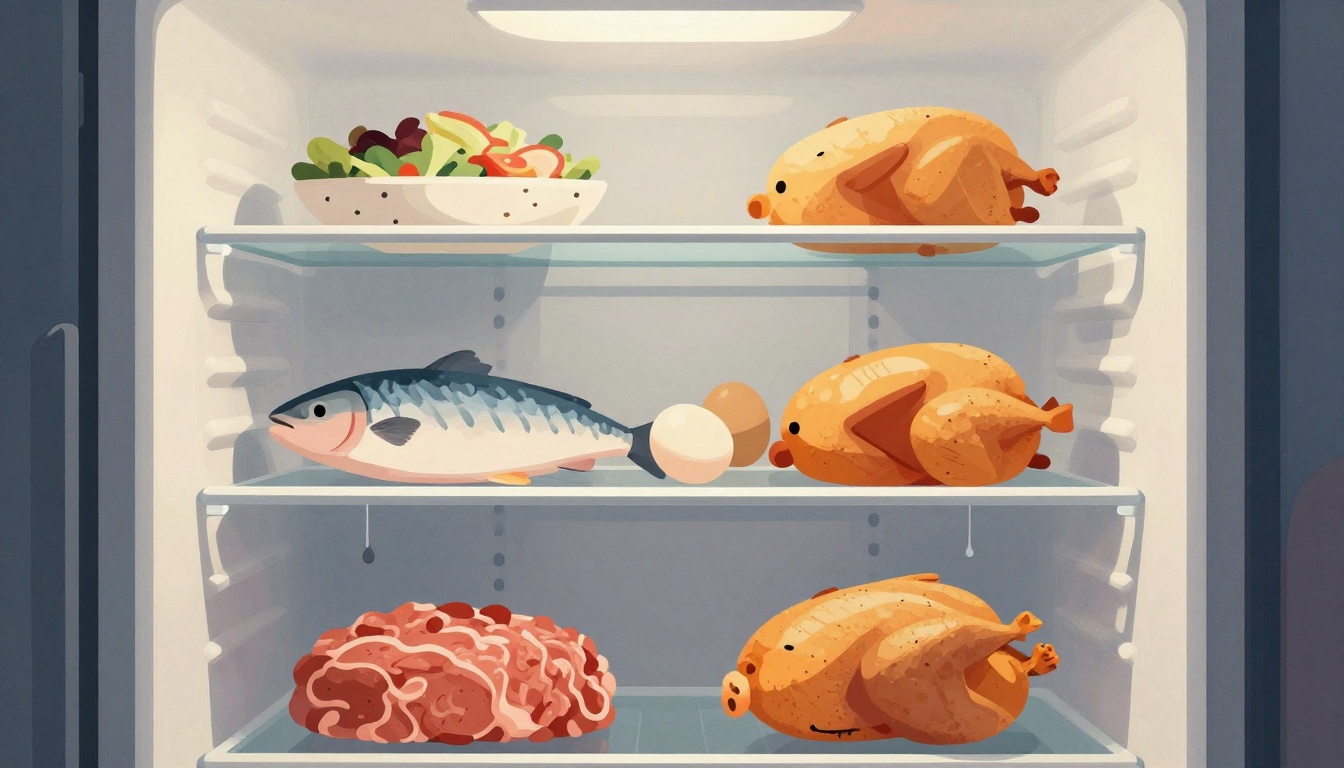
Follow this order from the top shelf to the bottom shelf in your commercial refrigerator:
- Top shelf: Ready-to-eat foods – This includes cooked meats, prepared salads, desserts, and any food that will be served without further cooking. Keep these items covered or in sealed containers to protect them from any potential drips.
- Middle shelves: Raw seafood, eggs, and raw pork – These foods have lower minimum internal cooking temperatures than poultry or ground meats. Storing them here keeps them below ready-to-eat items but above foods that need more cooking.
- Lower shelves: Raw ground meats – Ground beef and other ground meats have a higher minimum internal temperature than whole cuts, so they belong below the seafood and pork.
- Bottom shelf: Raw poultry – Whole or ground poultry has the highest minimum internal cooking temperature (165°F) and must be stored on the lowest shelf to prevent any possible drip onto other foods.
This order is based on the principle that foods requiring higher cooking temperatures should be stored lower, as explained by food safety experts at FoodSafePal.
Additional storage rules
- Always store raw meat in sealed containers or plastic bags to prevent leaks and drips, even when placed on the correct shelf.
- Keep your refrigerator at 41°F (5°C) or below to slow bacterial growth. Place a thermometer in the warmest part, near the top of the door, and check it at least twice a day.
- Use the door for condiments and drinks, not for dairy or eggs, because the door is the warmest part of the fridge.
- Label and date all prepared foods. In Utah, refrigerated, ready-to-eat, time/temperature control for safety food held for more than 24 hours must be marked with the day by which it should be consumed or discarded, according to ReFED's Utah policy overview.
A quick checklist for your kitchen
- Top shelf: ready-to-eat foods, covered
- Middle shelves: raw seafood, eggs, pork
- Lower shelves: raw ground meats
- Bottom shelf: raw poultry
- All raw meats in sealed containers
- Refrigerator at 41°F or below
- Thermometer visible and checked twice daily
- All prepared foods labeled with a discard date
How the Featured Expert Can Help
Getting your Utah food handler permit is a must before you can work with food in the state. Utah State Food Handlers offers live, in-person food safety certification classes across Utah, with state-approved training and online payment. Their hands-on instruction helps you master essential skills like proper food storage order, so you can pass your exam and keep your kitchen safe.