You prep raw chicken on a cutting board, wipe it down, then slice tomatoes for a salad. That single move can spread bacteria like Salmonella and Campylobacter to ready-to-eat food.
Cross-contamination is one of the most common causes of foodborne illness. It happens when harmful microorganisms transfer from raw meat, poultry, seafood, or eggs to other foods, utensils, or surfaces. The problem? You can't see, smell, or taste these pathogens.
Here's the good news: preventing cross-contamination doesn't require expensive equipment. It requires a system. Follow these four steps to keep your kitchen safe.
What is the primary purpose of using color-coded cutting boards in a commercial kitchen?
Select one answer.
Separate raw from ready-to-eat
The most critical rule: never let raw meat, poultry, seafood, or eggs touch cooked or ready-to-eat foods. This includes surfaces, utensils, and storage containers.
In the refrigerator, store raw items on the bottom shelf. This prevents juices from dripping onto produce, dairy, or cooked foods. Use sealed containers or tightly wrapped packaging for all raw proteins.
At the prep station, designate separate areas for raw and ready-to-eat foods. If you only have one prep table, sanitize it thoroughly between tasks.
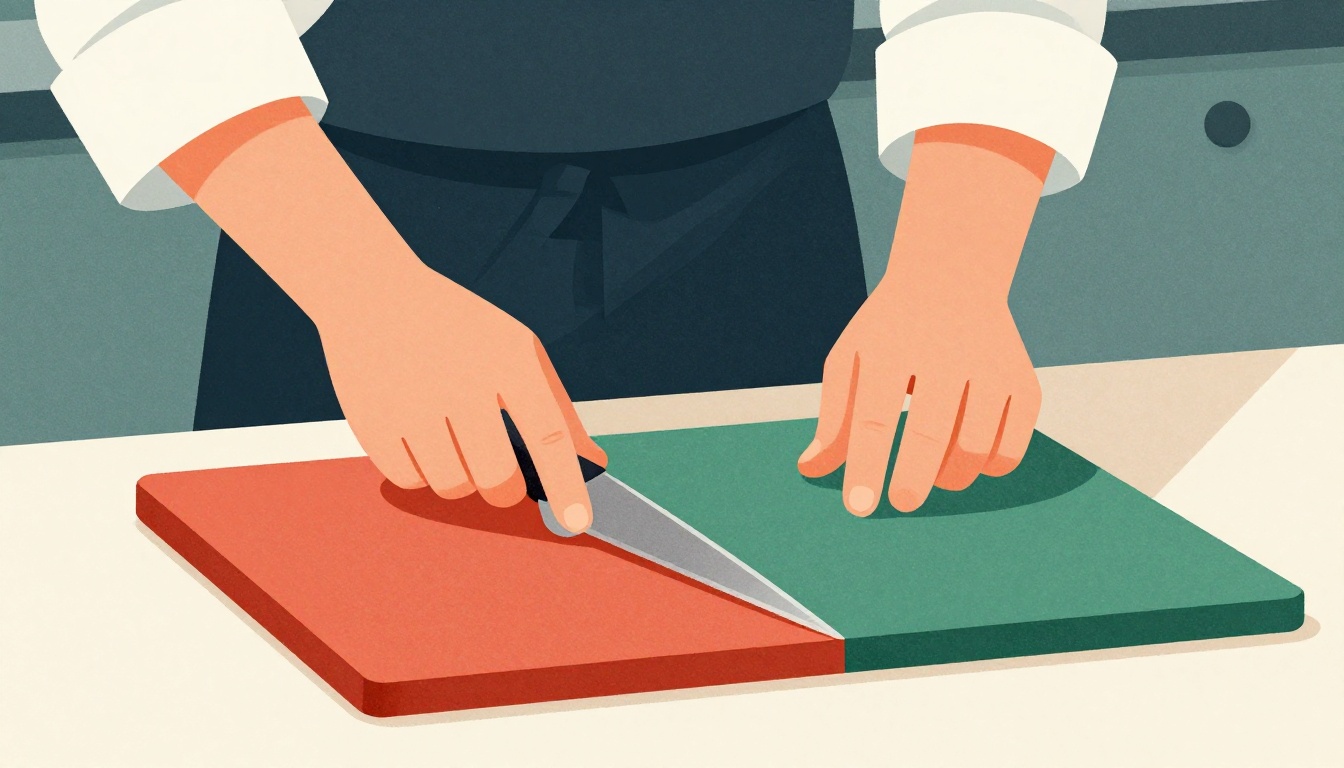
Use color-coded cutting boards
Color-coded cutting boards are a simple visual system that reduces contamination risk. The industry-standard HACCP system assigns specific colors to food types:
- Red: raw red meat (beef, pork, lamb)
- Yellow: raw poultry (chicken, turkey, duck)
- Blue: raw fish and seafood
- Green: fruits, vegetables, and salads
- White: dairy and baked goods
- Brown: cooked meats
Assign each board to one food category and never use them interchangeably. Replace boards when they become deeply scored or warped, as bacteria can hide in grooves.
Master handwashing and surface sanitation
Proper handwashing is your first line of defense. Wash with soap and warm water for at least 20 seconds before handling food, after touching raw meat, and after any break or task change.
A Rutgers-led study found that spice jars used during food preparation were the germiest surface in a kitchen. This reinforces the need to clean and sanitize all high-touch surfaces regularly.
Sanitize cutting boards, countertops, and utensils with a solution that kills illness-causing germs. The USDA recommends using a bleach solution (1 tablespoon unscented bleach per gallon of water) or an approved commercial sanitizer.
Store food safely
Proper storage prevents cross-contamination before it starts. Follow these guidelines:
- Wrap raw meat, poultry, and seafood in leak-proof packaging before refrigerating
- Store raw proteins on the lowest refrigerator shelves
- Keep ready-to-eat foods above raw items
- Never place cooked food on a plate that held raw meat or poultry
- Discard perishable foods that have been in the refrigerator for more than a week
Clean and disinfect your refrigerator interior every couple of months to prevent bacterial buildup.
How the Resident Expert Can Help
Mastering cross-contamination prevention is essential for every food service professional. At Utah State Food Handlers, you'll find live, in-person food safety certification classes across Utah. Their hands-on training covers practical skills like proper separation, color-coded board use, and sanitation procedures. With state-approved instruction and real-time feedback from an experienced instructor, you'll gain the confidence to keep your kitchen safe and pass your permit exam on the first try.